How floHVAC Works
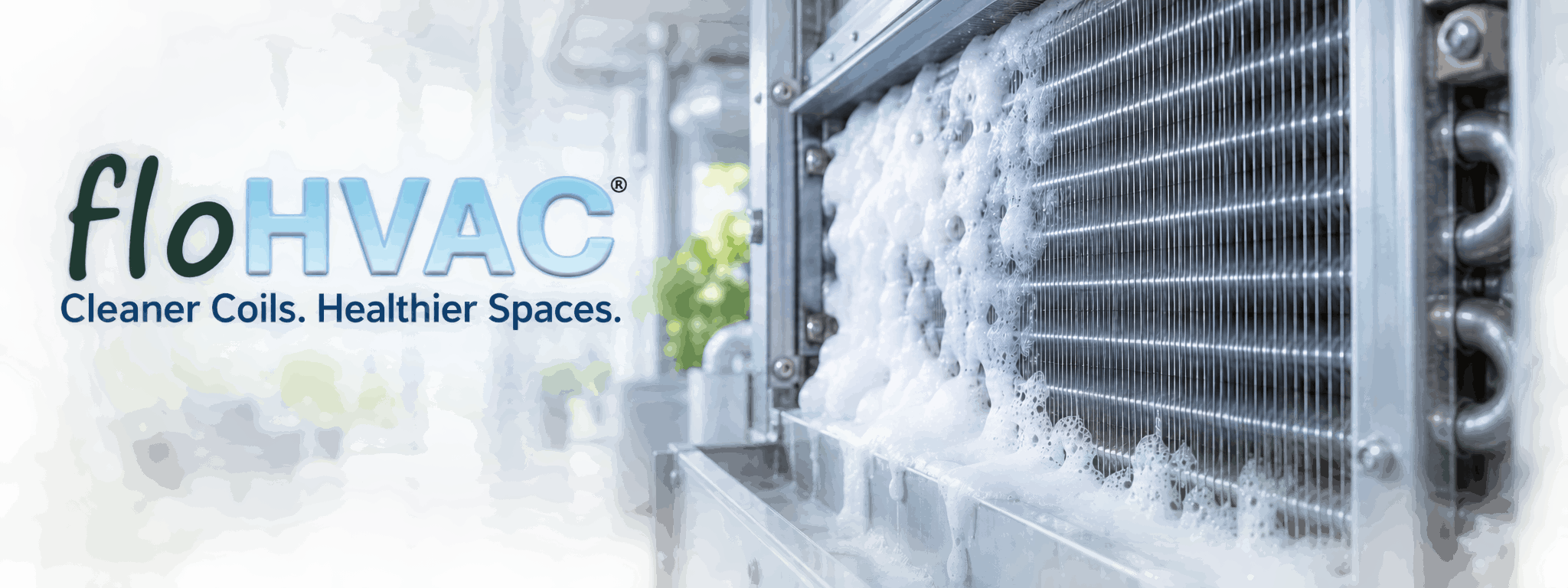
- Foam distributes the treatment and helps loosen deposits on the coil.
- Airflow carries the microbial treatment deeper through the coil surfaces.
- Time allows microbes and enzymes to continue breaking down organic buildup after application.
Operational Benefits
- No coil removal or pressure washing for routine application
- No rinse water source required
- No harsh or corrosive coil-cleaning chemicals
- Can be applied while facilities remain occupied when used as directed
- Helps keep pans and drains cleaner and free-flowing
- Supports improved airflow, heat transfer and HVAC efficiency
- Reduces water use and chemical runoff associated with conventional cleaning
Reported Field Results
floHVAC reports measurable improvements following coil treatment, including coil-cleaning time reduced by 50 percent or more, static-pressure reductions of up to 50 percent, and reduced fan and compressor amperage. Results depend on equipment condition, system design, application and other site-specific factors.
Designed for Real Facilities
floHVAC can be used across a range of HVAC configurations, including chilled-water systems, VRF and VRV units, rooftop equipment and single-room units. It is especially relevant for healthcare facilities, schools and universities, hotels, multifamily communities, office buildings, manufacturing environments and other facilities where shutdowns and intrusive maintenance are difficult to schedule.
Support Efficiency Without Disrupting Operations
Cleaner coils can help HVAC systems move air and transfer heat more effectively. By simplifying routine coil cleaning, floHVAC can help maintenance teams address buildup earlier and support energy, equipment-life and indoor-environment goals.
Learn More About floHVAC
Visit the complete floHVAC website for detailed application information, performance data, sustainability benefits and consultation options.
Visit floHVAC.com