
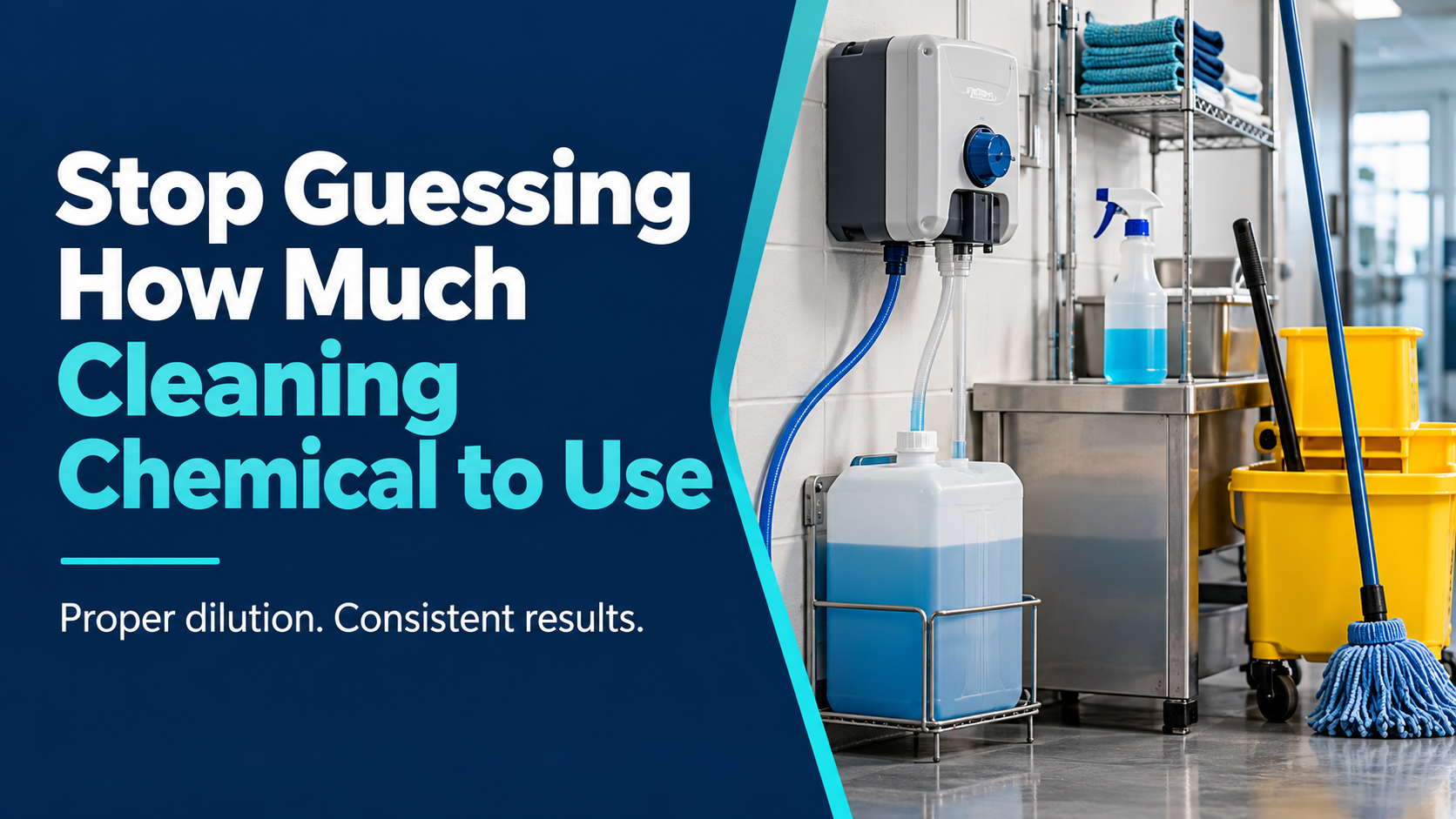
Stop Guessing How Much Cleaning Chemical to Use
When it comes to commercial cleaning chemicals, more is not always better. In fact, using too much product can create many of the same problems as using too little.
Overconcentrated cleaners may leave behind sticky residue, dull floors, damage surfaces, or require extra rinsing. Over-diluted products, on the other hand, may not clean effectively enough to remove soil, grease, or other contaminants.
For busy cleaning teams, it is easy to fall into the habit of pouring a little extra into a bucket or spray bottle just to be safe. But guessing at chemical ratios can lead to inconsistent results, unnecessary costs, and additional work for your staff.
A good dilution system takes the guesswork out of the process.
Why Proper Cleaning Chemical Dilution Matters
Cleaning chemicals are formulated to perform at specific concentrations. When a manufacturer recommends a certain amount of product per gallon of water, that ratio is designed to balance cleaning power, surface safety, and cost.
Adding extra chemical does not necessarily make the solution work faster or clean better. Instead, it may leave a film that attracts more dirt, creating floors and surfaces that seem to get dirty again almost immediately.
Incorrect dilution can also contribute to premature wear. Stronger solutions may damage floor finishes, discolor certain materials, or shorten the life of surfaces and equipment.
The opposite problem matters too. If employees use too little chemical, they may have to clean the same area multiple times to get the desired result. That means more labor and potentially more product use in the long run.
Consistency Makes Cleaning Easier
Manual mixing leaves a lot of room for variation. One employee might carefully measure every product. Another may estimate by sight. Someone else might assume that a bigger splash will handle a particularly dirty floor.
That inconsistency makes it difficult to determine whether a cleaning product is actually performing the way it should.
Dilution control systems can dispense a predetermined amount of chemical each time, helping employees prepare cleaning solutions correctly without stopping to measure them manually. They can also simplify training, particularly for facilities where several employees share cleaning responsibilities.
Standardizing the process helps ensure that the same product is being used at the same concentration from one shift to the next.
Control Chemical Costs Without Sacrificing Results
Even small amounts of wasted concentrate can add up over hundreds of buckets, bottles, and cleaning shifts.
Proper dilution helps facilities get the full value from the chemicals they purchase while reducing unnecessary product use. It can also make inventory easier to manage because managers have a clearer idea of how quickly products should be consumed.
If your facility seems to go through cleaning chemicals unusually quickly, struggles with residue, or gets inconsistent results from the same products, the problem may not be the cleaner itself. It may be how the product is being mixed.
Sani-Chem can help you evaluate your current cleaning products, dilution methods, and dispensing equipment to find a system that works for your facility. Contact Sani-Chem today to learn how the right chemical program can improve cleaning consistency while helping control labor and supply costs.